Crown thinning in Yiewsley
Crown thinning in Yiewsley is one of the most effective ways to improve the shape, health, and light levels of a tree without making it look heavily cut back. For local homeowners, landlords, schools, offices, and business premises, it offers a practical balance between tidiness and tree care. If a tree is becoming dense, blocking light, catching the wind too much, or starting to look crowded, thinning the crown can make a noticeable difference while keeping the natural outline intact.
In a place like Yiewsley, where gardens can be narrow, properties may sit close together, and mature trees often grow near roads, fences, garages, and neighbouring plots, the right pruning approach matters. A carefully planned crown thinning service helps reduce congestion in the canopy, improve airflow, and lower strain on weaker limbs. It can also make a tree more manageable for the long term, especially where access is limited or where overgrown branches are beginning to cause everyday problems.
This page explains what the service involves, when it is suitable, what happens on the day, and why choosing a local tree team in Yiewsley can be helpful. If you are looking for a tidy, professional solution that supports both the tree and your property, request a free quote and find out how a tailored crown thinning plan could work for your site.
What crown thinning means for local properties

Crown thinning is a selective pruning method that removes a portion of smaller, live branches throughout the canopy. The aim is to reduce the density of the crown without changing the overall height or natural shape too dramatically. Unlike harsh cutting or topping, thinning keeps the tree looking balanced and established while allowing more light and air to move through the branches.
For many Yiewsley properties, this is especially useful where trees have matured over time and begun to cast heavy shade onto lawns, patios, rear rooms, conservatories, or neighbouring gardens. It can also help with practical issues such as less leaf litter in roof gutters, improved visibility from windows, and reduced resistance during windy weather. In commercial settings, a lighter canopy can make outdoor areas more pleasant for customers, staff, and visitors.
In simple terms, crown thinning is about reducing overcrowding in the canopy. A tree that is too dense can hold dampness, trap debris, and place extra stress on internal limbs. A well-executed thinning works with the tree’s structure rather than against it, creating a healthier and more manageable result.
Why people in Yiewsley ask for crown thinning
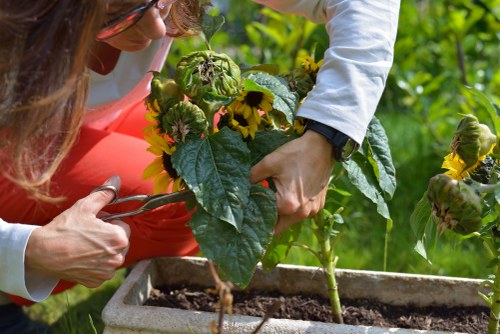
Local customers often contact a tree surgeon when a tree has become too dominant for the space it grows in. In Yiewsley, this can happen in older residential gardens, along boundary lines, around driveways, and in commercial car parks or shared access spaces. Trees that were once well proportioned can become too full after several seasons of growth, especially if they have not been managed regularly.
Another common reason is light. Dense crowns can make a garden feel dark and closed in, particularly where houses are close together or where trees stand on the south or west side of a property. Thinning helps let in more daylight while keeping enough foliage for privacy and appearance. It can also support lawns, flower beds, and smaller plants that struggle under heavy shade.
There are also safety and maintenance reasons. Heavy, congested canopies can catch the wind more strongly, and branches rubbing against each other may eventually weaken. On some sites, a thick crown also makes routine maintenance harder because it is more difficult to inspect, prune, and monitor. For many customers, crown thinning is a sensible middle ground between leaving a tree untouched and carrying out more drastic reduction work.
How crown thinning differs from other pruning work

It is easy to confuse crown thinning with crown reduction, pollarding, or general shaping, but the purpose of each service is different. Crown thinning focuses on removing selected smaller branches throughout the crown. Crown reduction is used when the overall size needs to come down, while shaping is more about form and aesthetics. Pollarding is a much more specific and often more dramatic technique, usually carried out on certain species and at particular stages of growth.
Because each tree and site is different, the right approach depends on the species, age, condition, and location of the tree. A mature maple in a back garden may need a different treatment from a large conifer beside a boundary, and both will differ again from a tree near a commercial entrance. A good arborist will always consider how much foliage can be safely removed and how the tree will respond afterwards.
Useful rule of thumb: thinning should improve the tree’s structure and performance, not strip it back so heavily that it loses its natural character. When customers ask for crown thinning in Yiewsley, they often want a tree that feels lighter and more open, but still healthy and attractive. That is exactly the balance a careful pruning plan aims to achieve.
Benefits of crown thinning for homes and businesses
For residential customers, the immediate benefit is usually more light and a less oppressive canopy. Gardens feel bigger, rooms may become brighter, and the tree often appears cleaner and better kept. A well-thinned crown can also improve enjoyment of outdoor space, particularly in terraces, semi-detached homes, and family gardens where a mature tree may be a central feature but is starting to dominate the area.
For commercial customers, the benefits are just as practical. Businesses in and around Yiewsley may need trees kept tidy for customer access, signage visibility, car park safety, and general site appearance. A lighter crown can reduce the risk of overhanging branches interfering with vehicles, lighting, or pedestrian routes. It can also improve the professional look of an entrance, forecourt, or landscaped frontage without removing the character of the planting.
Other common benefits include:
- Improved airflow through the canopy
- Reduced rubbing between branches
- More daylight reaching the property
- Lower wind resistance in exposed spots
- Better long-term tree structure
- Less crowded growth after seasonal regrowth
What is included in a crown thinning service
A professional crown thinning job should begin with a proper look at the tree, the surrounding space, and the intended outcome. The work is not just about cutting branches at random. It should follow a clear plan that respects the natural shape of the species and the needs of the site. In Yiewsley, that matters because access can vary from one property to the next, and working carefully helps protect fences, paving, parked cars, flowerbeds, and neighbouring gardens.
Typical service stages may include an initial assessment, agreed pruning targets, selective branch removal, and a tidy finish once the work is complete. The team may also check for broken, crossing, or congested limbs that can be removed as part of the thinning process. If the tree has deadwood or minor defects, those may be discussed separately depending on the condition of the tree and the scope of work.
Depending on the tree and location, the service may involve:
- Selective removal of smaller live branches throughout the canopy
- Retention of the tree’s natural outline and balance
- Light deadwood removal where appropriate
- Careful disposal of arisings from the site
- Cleaning of access areas used for the work
- Attention to nearby structures, planting, and surfaces
How the work is usually carried out
Most crown thinning jobs start with a visual inspection from ground level and, where appropriate, a closer look at the tree’s canopy and surrounding constraints. The team then identifies which branches should be removed to achieve the right degree of openness. Cuts are made with the tree’s response in mind, aiming to avoid unnecessary stress and to preserve a stable framework of branches.
The end result should be a tree that looks natural, not sparse or uneven. You should be able to tell that it has been professionally maintained, but not that it has been overworked. For many customers, that difference is what makes a quality pruning service worthwhile.
Local site conditions that matter in Yiewsley

Working on trees in Yiewsley often means dealing with real-world access issues. Some properties have narrow side passages, shared rear access, small front gardens, or limited parking nearby. Others are close to busier roads or have boundary lines that require careful positioning of equipment and waste. A local team that understands these conditions can plan the job more efficiently and reduce disruption for you and your neighbours.
Yiewsley also has a mix of property types, from traditional homes with established gardens to newer developments, flats, mixed-use sites, and commercial premises with limited outdoor space. Mature trees in these settings often need pruning that balances appearance, safety, and practicality. In some cases, the main goal is to restore natural light; in others, it is to improve clearance above paths, driveways, or loading areas.
Nearby areas such as West Drayton, Hillingdon, Longford, Uxbridge, Cowley, and the wider west London fringe can present similar challenges. That local familiarity can help when planning access, managing waste removal, and working around busy schedules. If the tree is on a boundary or close to neighbouring land, a careful and considerate approach is especially important.
Examples of common local situations
- A rear-garden tree blocking afternoon light from the house
- An overgrown canopy brushing a fence or shed roof
- Branches hanging over a driveway used daily by family vehicles
- Trees at a business site creating too much shade near an entrance
- Dense growth making seasonal maintenance harder than it should be
Which trees are often suitable for thinning?
Many broadleaf trees respond well to crown thinning when the work is done sensibly. Common examples include maple, lime, oak, beech, ash, birch, cherry, and hornbeam, although the exact suitability depends on the tree’s condition and the desired result. Some conifers can also be thinned lightly in certain situations, but they require a cautious approach because different species tolerate pruning very differently.
The age and health of the tree are important. A younger tree may need only light work, while a mature tree may benefit from more selective pruning to manage density and improve internal structure. If a tree is already stressed, diseased, storm-damaged, or poorly formed, the arborist may recommend a different method or a smaller amount of thinning. This is why a site inspection matters before any work begins.
Good thinning is tailored, not routine. A tree with dense growth may look like an obvious candidate, but the right outcome depends on species, season, target area, and how the tree is used within the landscape. That is especially true in residential streets and mixed-use areas around Yiewsley where one tree can affect several nearby properties.
Preparing for your crown thinning appointment
A little preparation helps the work go smoothly and reduces delays on the day. You do not need to do anything complicated, but it is useful to think about access, parking, and any areas you would like protected. If the tree is in a back garden, check whether gates, sheds, or side passages can be opened fully. If access is shared, it is sensible to let neighbours know in advance where possible.
Try to clear the area beneath the tree if practical, especially if there are items that could be moved easily, such as garden furniture, potted plants, toys, tools, or bicycles. If parking space is tight, leaving room for the team’s vehicles can make a big difference. For commercial premises, it may help to coordinate with staff or site management so the work can be carried out with minimal disruption.
Simple preparation checklist:
- Remove or secure small items from under the tree
- Make access gates and side passages available if needed
- Reserve space for vehicles if possible
- Tell neighbours if branches overhang shared boundaries
- Point out any concerns, such as cables, sheds, or fragile surfaces
What to mention during your enquiry
When asking for a quote, it helps to explain the tree’s approximate size, where it is located, and what you would like to achieve. For example, you might want more daylight, less wind resistance, or a tidier crown above a driveway. Mention if the site is tight for access or if the tree is near a road, wall, garage, or boundary. The more detail you give, the better the service can be planned.
Clear communication upfront often leads to a smoother and more accurate quote. It also helps the arborist determine whether crown thinning is the best option or whether another pruning service would better suit your tree.
Pricing factors and what affects the quote
Every crown thinning job is different, so prices are usually based on the time, access, complexity, and waste involved rather than a one-size-fits-all figure. A small ornamental tree in a straightforward front garden will take less time than a large, mature tree overhanging multiple boundaries. Access can also affect the cost if equipment has to be carried through narrow spaces or if waste needs to be removed carefully from a difficult location.
Other factors include the tree species, height, density, condition, and whether additional work is needed such as deadwood removal, crown lifting, or minor corrective pruning. If a tree is close to a building, conservatory, garage, commercial frontage, or public-facing area, extra care may be needed. That can influence the amount of planning and labour required.
Factors that may affect pricing include:
- Tree size and canopy density
- Access to the work area
- Waste removal requirements
- Any extra pruning requested
- Site constraints and nearby obstacles
- Time needed for safe completion
To get a clear idea of cost, the best next step is to request a free quote. A proper assessment will give you a more accurate picture than a rough estimate based only on photographs or tree height.
Why choose a local Yiewsley tree team
Choosing a local company for crown thinning in Yiewsley can make the service more convenient from the start. Local teams are often better placed to understand the layout of the area, the kinds of access issues that come up, and the practical needs of nearby residential and commercial customers. That can save time and reduce the risk of avoidable disruption.
Local knowledge also helps when the job involves shared boundaries, busy streets, tight parking, or work that needs to be completed with consideration for surrounding properties. A team that regularly works in and around Yiewsley is more likely to plan with these realities in mind and to bring the right equipment for the site. For customers, that means fewer surprises and a more straightforward experience.
Reasons local customers often prefer a nearby arborist:
- Faster site visits and easier scheduling
- Better understanding of local property layouts
- More practical planning for access and waste removal
- Useful experience with gardens, roads, and commercial sites in the area
- More responsive support if follow-up work is needed later
Residential and commercial customers welcome
Crown thinning is not just for private gardens. It is also valuable for landlords, property managers, housing developments, schools, retail sites, hospitality venues, and other businesses that want trees maintained responsibly. A tidy canopy can contribute to a better customer experience, safer circulation, and improved overall presentation of the site. Whether the aim is more light, better clearance, or a cleaner appearance, a planned approach usually delivers better results than waiting until the tree becomes difficult to manage.
How crown thinning supports tree health and longevity
When carried out correctly, crown thinning can support long-term tree health by reducing excessive crowding. Better airflow through the branches can help the canopy dry more quickly after rain, while improved light penetration can benefit lower foliage and the general structure of the tree. The work can also lessen internal rubbing and reduce the chance that weak or poorly placed branches continue to compete for space.
That said, more is not always better. Over-thinning can leave a tree stressed or visually unbalanced, and removing too much foliage can weaken its ability to produce energy. This is why skilled pruning is so important. The aim is not to make the tree look “empty”, but to create space in a controlled way so it remains vigorous, stable, and attractive.
A well-managed crown thinning can make routine care easier in future seasons. It may also reduce the need for more drastic intervention later if the tree remains in good condition and is checked periodically.
Frequently asked questions
How do I know if my tree needs thinning?
Signs can include a very dense canopy, poor light in the garden, branches rubbing together, a heavy feel in windy conditions, or excessive shade near the house. If you are unsure, an arborist can inspect the tree and advise whether thinning is suitable.
Will the tree look bare afterwards?
It should not. A professional thinning job is selective and subtle, designed to reduce congestion while keeping the tree looking natural. If a tree is left looking sparse, the work may have gone too far.
Can thinning help with wind resistance?
Yes, in many cases. Reducing the density of the crown can allow wind to pass through more easily, which may help reduce strain on branches. However, the exact response depends on the species, shape, and condition of the tree.
Is crown thinning suitable for every tree?
No. Some trees tolerate it better than others, and some situations call for crown reduction, deadwood removal, or a different form of management. A site assessment is the best way to determine the right approach.
Do I need permission before the work starts?
Sometimes there may be considerations such as tree preservation status, conservation areas, or boundary agreements. If any permissions or checks are needed, they should be reviewed before work begins. A local arborist can help identify likely issues during the planning stage.
How often should a tree be thinned?
It depends on the species, growth rate, and site conditions. Some trees need attention only occasionally, while others benefit from periodic maintenance. Regular inspections can help decide the right timing.
Areas covered around Yiewsley
Services for crown thinning are typically available across Yiewsley and nearby parts of west London and the surrounding area. This includes neighbouring residential streets, shared estates, business properties, and locations where access needs careful planning. Common nearby areas may include West Drayton, Hillingdon, Longford, Uxbridge, Cowley, and surrounding local communities.
If you are not sure whether your property falls within the usual service area, it is worth asking during your enquiry. A local team may still be able to help depending on the size of the job, access arrangements, and the nature of the site.
Book crown thinning in Yiewsley
If a tree on your property is becoming too dense, blocking light, or creating ongoing maintenance issues, crown thinning may be the right answer. It is a practical, respectful way to improve the tree’s form without removing more than is necessary. For many Yiewsley customers, it offers the ideal mix of appearance, safety, and usability.
Whether you are a homeowner looking to brighten the garden, a landlord keeping outdoor space manageable, or a business wanting a smarter frontage, a carefully planned pruning visit can make a real difference. Contact us today to discuss your tree, ask about availability, and book your service now if you are ready to move forward.
Request a free quote and take the next step toward a lighter, healthier, better-balanced tree in Yiewsley.